Motion Control

Motion Control Studio

High-Speed Robot Camera Production with Precision Robotic Arm Systems

Motion control brings a robotic motion control camera system into film, commercial, and video production. A motion control camera system creates repeatable camera movements with frame-perfect precision that human operators cannot reproduce by hand., with the kind of precision, speed, and repeatability that high-end commercial work demands.

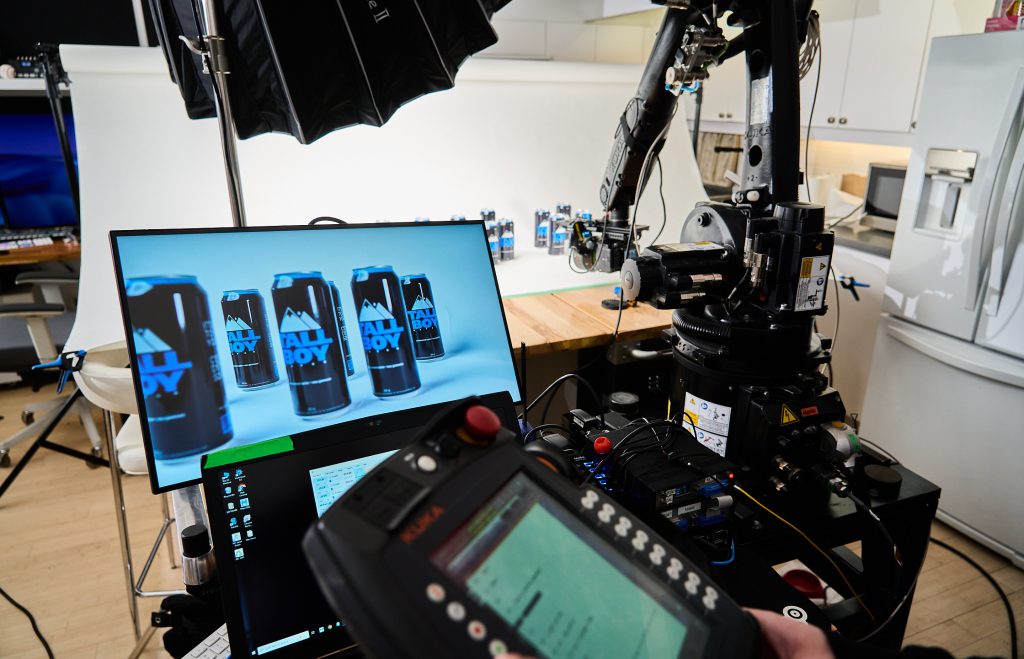
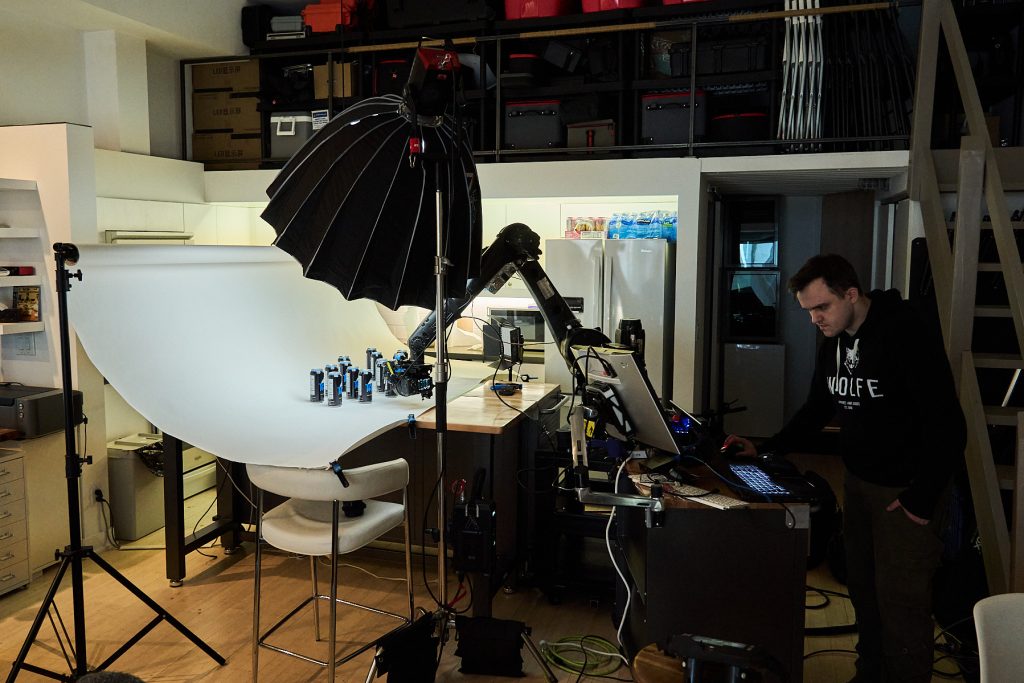
At LVL UP Studios in Toronto, we’ve integrated a Mars MOCO robotic arm into our full studio environment. Whether you’re shooting a tabletop product spot, a high-speed food sequence, a music video, or a multi-pass VFX plate, motion control gives you total command over the camera, the timing, and the result.

Why It Matters

  • Frame-perfect repeatability for VFX and compositing
  • High-speed motion for dynamic product and tabletop shots
  • Full control over camera, timing, and synchronization
  • Consistent results across multiple takes

This is how high-end commercials get that flawless, polished look.
What You Can Create

  • Product & commercial content
  • Food, liquid, and macro shots
  • Music videos & branded visuals
  • Multi-pass VFX sequences

This is how high-end commercials get that flawless, polished look.

Precision Motion Control Camera Production with Mars MOCO Robotic Arm System

The Mars MOCO is a compact, high-speed motion control robot arm and camera rig built for modern film and commercial production. Every move is programmable. Every move is repeatable down to the frame. Once you’ve dialed in the shot you want, the robotic arm will execute it identically on take after take.

This is what separates motion control photography from traditional camera work. A human operator can get close. A motorized robotic camera system gets it exact. For cinematographers working on layered VFX shots, product photography, or anything requiring frame-perfect synchronization between camera, subject, and lighting, that exactness is the whole point.

The Mars MOCO robotic camera system provides customizable range of motion, speed curves, easing, and programmable camera control. Range of motion, speed curves, easing, and timing are all programmable through software. You can preview the move, refine it, and lock it in before the camera ever rolls.

Shoot at LVL UP Studios

Most Affordable Robot Package in Toronto!

In-House Motion Control Rates:
Day Rate (10h) $2,000
Hourly $400

Including Operator

Bring your idea, and we’ll handle the execution.

From concept to final shot, we combine motion control with a fully equipped studio environment to deliver standout visuals.

Motion Control Robotics for Product, Film, Music Videos, and Virtual Production

Motion control opens up creative options across nearly every type of production we host at the studio:

Product and commercial content. Tabletop, hero shots, packaging reveals, and brand films where the visual polish has to match the budget.

Food, liquid, and macro photography. High-speed captures of pours, splashes, drips, and textures. The repeatability matters here because food styling rarely survives more than a few takes, and motion control lets you nail the move on the one take that looks right.

Music videos and branded visuals. Dynamic, choreographed camera movements that sync to music or talent. Motion control gives directors a way to design camera moves with the same precision they bring to choreography and edit.

Multi-pass VFX sequences. Plate, beauty, lighting, and matte passes shot with frame-accurate repeatability so the compositor has clean, alignable layers to work with. This is the use case motion control was originally built for, and it’s still where the technology delivers the most value.

On-set virtual production. Motion control supports on-set virtual production by integrating robotic camera tracking with LED volumes, Unreal Engine pipelines, and virtual environments in real time. The robotic arm’s tracking data syncs with virtual environments in real-time, giving you the camera precision needed for immersive VR and virtual reality content.

Product and commercial content. Tabletop, hero shots, packaging reveals, and brand films where the visual polish has to match the budget.

Food, liquid, and macro photography. High-speed captures of pours, splashes, drips, and textures. The repeatability matters here because food styling rarely survives more than a few takes, and motion control lets you nail the move on the one take that looks right.

Music videos and branded visuals. Dynamic, choreographed camera movements that sync to music or talent. Motion control gives directors a way to design camera moves with the same precision they bring to choreography and edit.

Multi-pass VFX sequences. Plate, beauty, lighting, and matte passes shot with frame-accurate repeatability so the compositor has clean, alignable layers to work with. This is the use case motion control was originally built for, and it’s still where the technology delivers the most value.

On-set virtual production. Motion control supports on-set virtual production by integrating robotic camera tracking with LED volumes, Unreal Engine pipelines, and virtual environments in real time. The robotic arm’s tracking data syncs with virtual environments in real-time, giving you the camera precision needed for immersive VR and virtual reality content.

Seamless Integration of the Motion Control Robotic Camera System into Production Workflows

The robotic camera system integrates with lighting, camera tracking, synchronization, PTZ systems, pedestal moves, and live event production workflows. It’s built into the studio’s broader production environment, which means your motion control shoot benefits from full lighting integration, camera tracking, synchronization with effects, and on-location-quality infrastructure without leaving the building.

Our team handles the technical setup. Your DP, director, and crew work with the rig the same way they’d work with any other piece of camera support, except now the camera move is programmed, previewed, and repeatable. The Mars MOCO’s compact footprint also means it fits into setups where a larger Bolt-style arm wouldn’t, giving you precision and versatility in tighter spaces.

Motion Control Camera Studio Rental in Toronto for Robotic Production

LVL UP Studios is a full motion control rental and production service based in Toronto, serving clients across Canada and beyond. When you book the studio, you’re booking the Mars MOCO rig, the studio space, the lighting infrastructure, and a team that knows how to run all of it together.

We work with agencies, production companies, directors, and brands on commercial, music video, product, food, and virtual production shoots. If you have a concept that needs motion control to execute, bring it to us and we’ll handle the setup, programming, and execution.

High-end commercials use motion control for repeatable camera movements, synchronized lighting, robotic precision, and frame-accurate visual effects production. It’s also how modern productions deliver shots that compete on a global level. Whether you’re planning a product launch, a music video, a brand film, or a VFX-heavy sequence, the rig is here, the studio is ready, and the team is set up to make it happen.Ready to book your motion control shoot? Get in touch and let’s talk through your project.

Motion Control Camera and Studio FAQ Section

Is my project a good fit for motion control?

Motion control camera production is ideal for tabletop product commercials, food photography, music videos, branded video content, and multi-pass VFX filmmaking. If your shot requires repeatability, precision, synchronized movement, or complex camera paths that need to be repeated exactly, motion control is usually the right solution.

Do I need a prelight day before the shoot?

For simple moves, prelight may not be necessary. For complex multi-axis moves, VFX sequences, synchronized practical effects, or shoots involving multiple passes, we strongly recommend a prelight day to test, refine, and lock the motion before production.

Can VFX supervisors work on set during motion control shoots?

Yes. Motion control is often used specifically for VFX-heavy productions where supervisors need frame-accurate repeatability between passes. VFX teams can work directly with our crew to ensure clean plates, lighting passes, and compositing requirements are properly captured.

Can agency clients monitor the shoot remotely?

Yes. We can support remote client monitoring depending on the production setup. This allows agencies, brands, and creative teams to review camera moves, approvals, and adjustments without needing the full team physically on set.

What does a typical motion control shoot day look like?

A typical shoot starts with rig setup, camera balancing, lighting adjustments, and motion programming. Once the move is approved, we run test passes, refine timing, and then move into final production takes. For more complex shoots, programming and testing may happen during a separate prelight day before the main shoot.

What types of projects are not a good fit for motion control?

Projects that rely entirely on spontaneous handheld movement or fast documentary-style shooting are usually better suited for traditional camera operation. Motion control works best when precision, repeatability, and planned camera choreography are essential to the final result.

Can the robotic arm sync with practical effects like liquid pours, smoke, or splashes?

Yes. Motion control is commonly used for high-speed liquid pours, splash shots, smoke effects, and product reveals that require exact timing. The robotic arm can be programmed to sync with practical effects, lighting cues, and external triggers for frame-perfect execution.

What is a robotic camera system?

A robotic camera system is a programmable robotic arm that holds and moves a camera with frame-perfect precision. Unlike a human operator, a motion control rig like the Mars MOCO can repeat the exact same camera move on every take, at speeds and angles that aren’t physically possible by hand. It’s the standard tool for high-end commercial, product, and VFX work.

Why use motion control for your shoot?

Motion control gives you three things a traditional camera setup can’t: repeatability, speed, and precision. If you’re shooting multi-pass VFX, your composite needs frame-accurate alignment between takes. If you’re shooting food or liquid, you usually only get one or two takes before the styling falls apart. If you’re shooting a product hero, you need the camera move to be flawless. Motion control delivers all three.

Can I mount my own camera on the Mars MOCO?

Yes. The Mars MOCO is built to support a wide range of professional cameras. Our team will confirm compatibility and handle the mounting and balancing during pre-production so the rig is ready to go on shoot day.

How long does it take to program a motion control move?

It depends on the complexity. A straightforward dolly or arc move can be programmed in under an hour. A complex multi-axis move with synced lighting and effects can take several hours of pre-production. We typically recommend building programming time into your shoot schedule, or running a pre-light day for more involved sequences.

Will I have to program the rig myself?

No. Our team handles the technical setup, programming, and execution of every motion control move. Your DP and director focus on the creative direction. We translate that into the programmed move and run the rig during the shoot.

How big can the products or subjects be?

The Mars MOCO is designed for tabletop, product, food, and macro work, as well as larger setups including talent-based shots for music videos and commercials. If you’re unsure whether your subject fits the rig’s range of motion, send us your concept and we’ll confirm during pre-production.

Can audio be synced with the robotic camera?

Yes. The rig’s programmed moves can be timed to audio, music, or any external trigger, which is especially useful for music videos, branded content, and any sequence where camera movement needs to hit specific beats.

Where is the motion control studio located?

LVL UP Studios is based in Toronto, Ontario. Our clients include Toronto and GTA-based productions, Canadian agencies, and international teams coming to Toronto for their shoots. You can reach us at  160 Baldwin St Unit 301, Toronto, ON M5T 3K7 Phone: (647) 447-4854 and website https://lvlupstudios.ca/